
MELCADEMY · AN EIGHT-MODULE LEARNING PATH
AI & Data Literacy for NGO and Development Professionals
Use data confidently. Work with AI responsibly. Make better evidence-based decisions.
Build practical judgement for NGO and development work. Learn to question numbers, weigh evidence, communicate findings and verify AI-assisted analysis through illustrated lessons and interactive practice.
Beginner–intermediate · No coding required · Self-paced
Lifetime access · 30-day refund policy · Interactive practice activities are optional.
8
Modules, including capstone
52
Illustrated lessons
20
Interactive practice activities
1
Self-study capstone
From everyday data to defensible decisions
Read and question evidence
Interpret percentages, averages, comparisons and charts. Spot data-quality problems, bias and missing perspectives, then distinguish findings from claims and recommendations.
Use AI with verification
Ground requests in evidence, protect sensitive information and challenge confident but unsupported outputs. Apply calculation, source, logic and reality/context checks in a Verified AI Analysis.
Practise a real decision process
Advise the fictional FutureWorks organisation on its Youth Pathways Programme. Inspect mixed evidence, audit claims and write an Evidence-to-Decision Brief before comparing your work with model feedback.
How you will learn
Explore Modules 1–7 in any order, with unrestricted navigation within each module. Complete all seven to unlock Module 8 — Evidence-to-Decision Challenge, your separate capstone course, at no additional charge. Learn through MELcademy illustrated lessons, short interactive activities, knowledge checks and practical exercises. Use the downloadable illustrated module companions to revisit the methods and checklists. The curriculum suggests 6–8 instructional hours, with additional time for exercises and the capstone.
A self-study completion pathway. Complete the learning activities, prepare your capstone brief, review the rubric and model feedback, and complete the final knowledge and judgement check. The programme offers a certificate of completion; it does not promise instructor grading or an independently assessed competence award.
Your eight-module learning path
Build your judgement step by step, from everyday data questions to a complete evidence-based recommendation.

MODULE 1 · 5 LESSONS
Working in a Data-and-AI World
Identify where data literacy, AI literacy or both are needed in routine programme, reporting and management tasks.
Explore Module 1
MODULE 2 · 6 LESSONS
Reading Data Without Getting Fooled
Identify numerators and denominators, interpret percentage change and recognise when an average hides the distribution.
Explore Module 2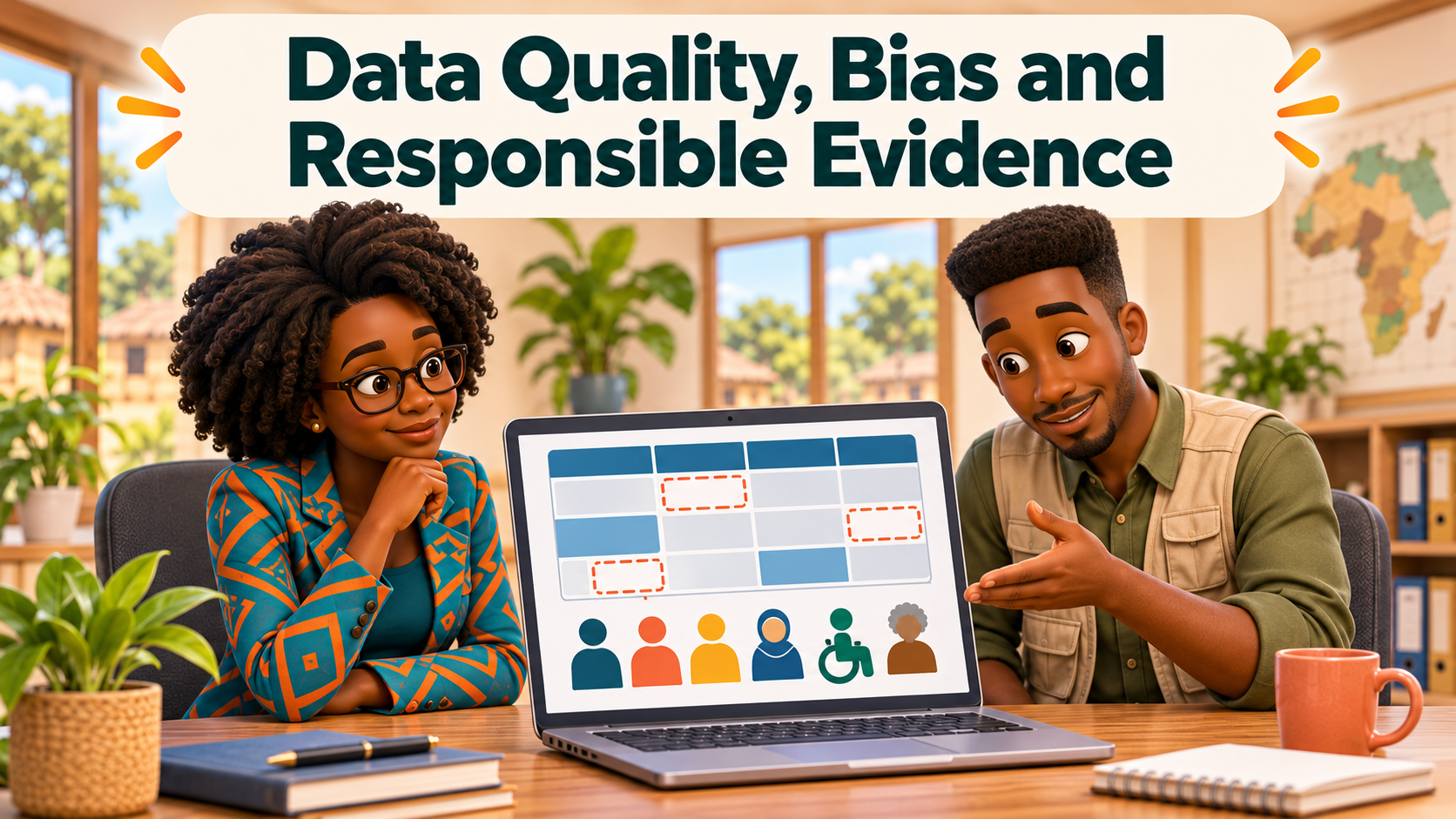
MODULE 3 · 6 LESSONS
Data Quality, Bias and Responsible Evidence
Use six practical quality dimensions and recognise missing, messy, invalid or duplicate records.
Explore Module 3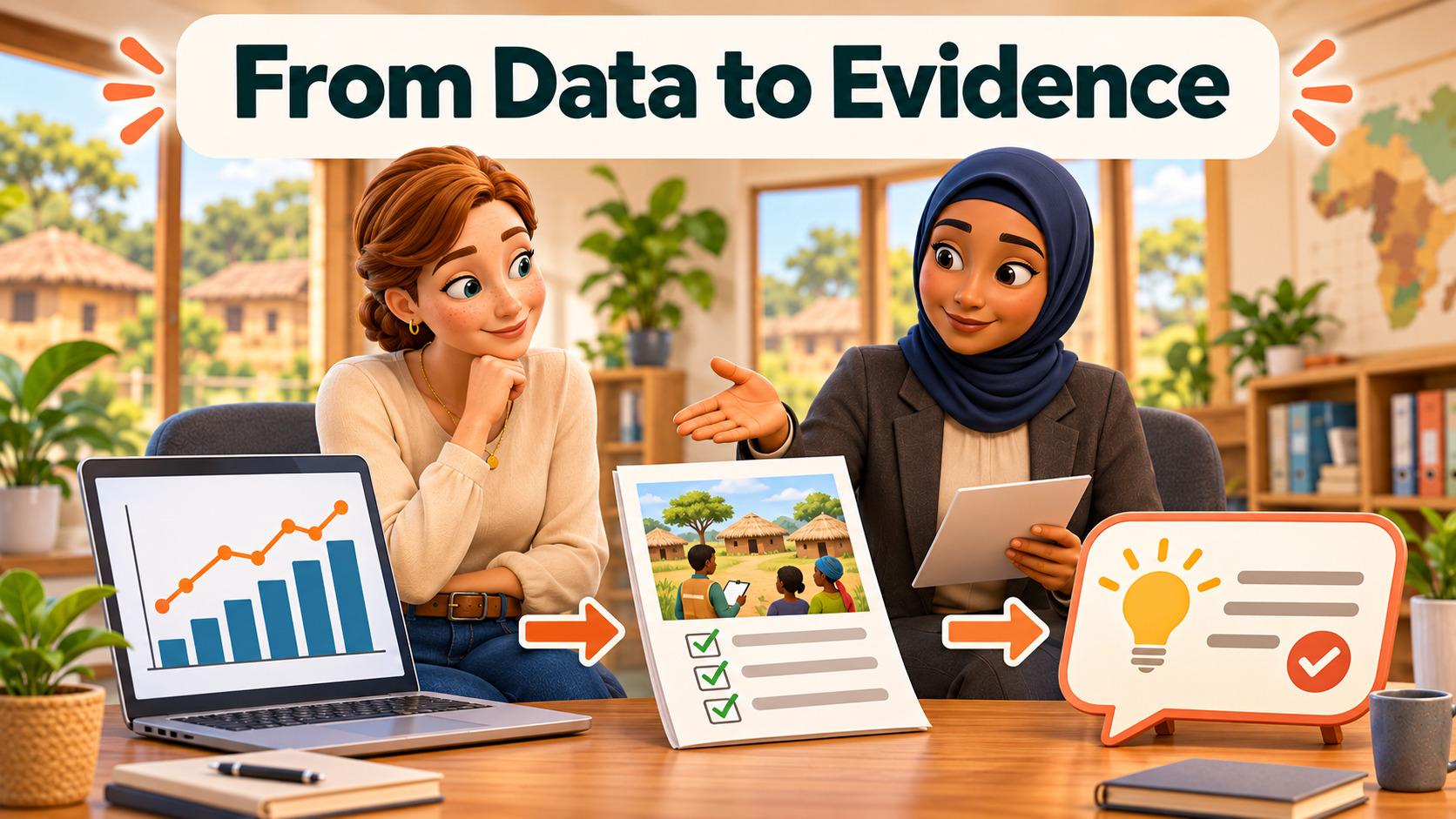
MODULE 4 · 7 LESSONS
From Data to Evidence
Turn a vague request into a focused analytical or decision question and identify the evidence it needs.
Explore Module 4
MODULE 5 · 6 LESSONS
Communicating Evidence
Adapt your communication to what the audience needs to know while preserving the underlying meaning.
Explore Module 5
MODULE 6 · 7 LESSONS
Understanding and Working With AI
Explain generative AI and language models in everyday terms and identify suitable bounded tasks.
Explore Module 6
MODULE 7 · 8 LESSONS
Using AI With Data Safely
Give AI a clear question, relevant context and constraints for working with supplied data.
Explore Module 7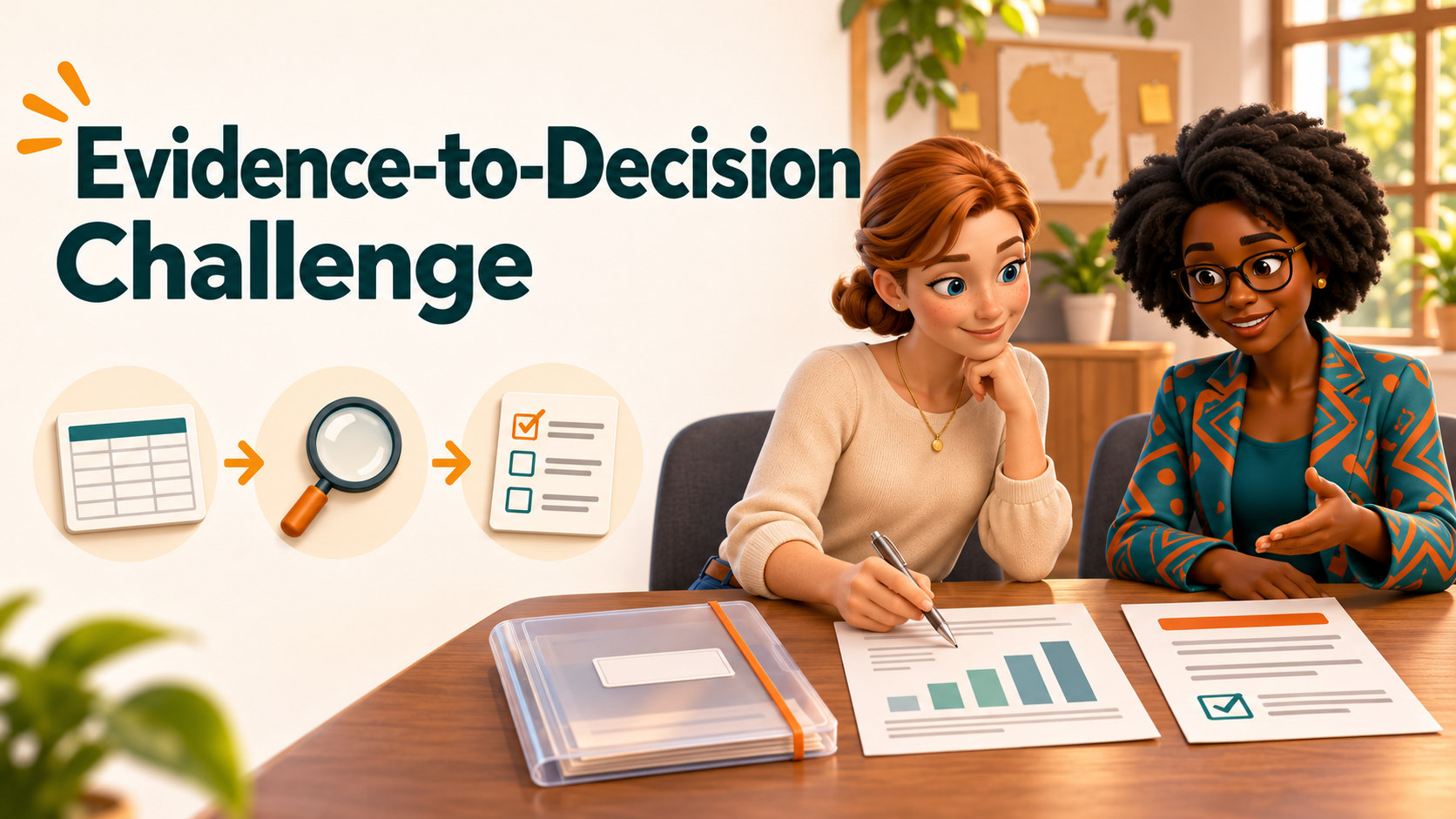
MODULE 8 · 7 LESSONS
Evidence-to-Decision Challenge
Examine data quality, follow-up coverage, group differences and qualitative feedback before judging programme results.
Explore Module 8